NORSE Evidence Database
Building the largest systematic dataset on NORSE & FIRES worldwide
463
Eligible articles
4,000+
Patients described
1,850+
Individual-level data
40+
Countries represented
Results from this systematic database review will be published in peer-reviewed journals.
To advance understanding of NORSE and FIRES, the ICM NORSE team created a comprehensive, systematic evidence database. Using rigorous PRISMA methodology, we aggregated data from published literature to establish a large-scale, multi-center dataset enabling novel research and clinical insights.
PROSPERO Registration
CRD420261395810
Methodology
01PRISMA Search Summary+
A systematic PRISMA search was conducted using key terms: 'new-onset refractory status epilepticus', 'febrile infection-related epilepsy syndrome', 'NORSE', 'FIRES', and related variants.
Search date
Updated September 14, 2026
Selection process
Multi-step screening by two independent experts
Study types
Case reports, case series, reviews, pathophysiology studies, guidelines
Total eligible articles
463 (184 case reports, 150 case series, 62 reviews, 29 pathophysiology studies)
02Database Scope+
Our systematic review represents one of the largest aggregated NORSE/FIRES datasets worldwide:
- →More than 4,000 patients described across all studies
- →More than 1,850 patients with individual-level data available
- →Both pediatric and adult populations
- →Multi-country representation across 40+ countries
03Global Research Coverage+
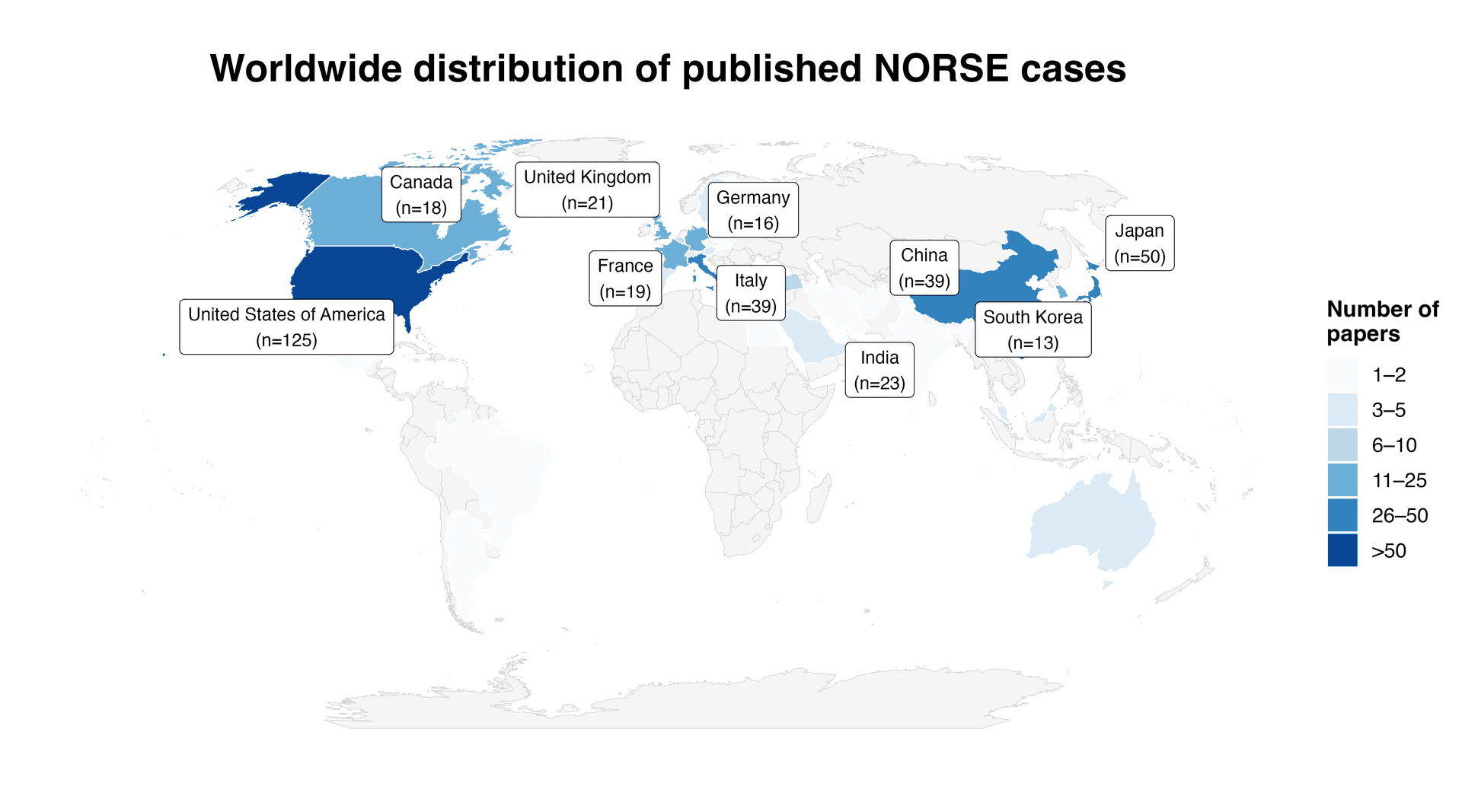
United States
125 articles
Japan
50 articles
Italy
39 articles
China
39 articles
This international dataset reflects the global recognition of NORSE/FIRES as a significant clinical challenge.
04Data Extraction Categories+
ADemographics+
Country of enrollment, center of enrollment, age group (pediatric vs. adult), age at presentation, sex.
BPresentation+
FIRES classification
Prodromal symptoms: fatigue, respiratory symptoms, gastrointestinal symptoms, behavioral changes, headache, rash, consciousness alterations, memory disturbances, sleep disorders.
CEtiology+
Cryptogenic, autoimmune encephalitis (AIE), viral, genetic, and other identified causes with detailed characterization.
DTreatment+
Immunotherapies:
- →First-line: steroids, intravenous immunoglobulin, plasma exchange
- →Second-line: anakinra, tocilizumab, intrathecal steroids, rituximab, cyclophosphamide, anti-JAK-STAT agents
- →Dosages and time-to-initiation when available
Other Therapeutic Approaches:
Ketogenic diet (KD), vagus nerve stimulation (VNS), electroconvulsive therapy (ECT), therapeutic hypothermia.
Antiseizure Medications (ASMs):
Levetiracetam, phenobarbital, phenytoin, valproic acid, lacosamide, perampanel, and others.
Continuous Intravenous Anesthetic Drugs (CIVADs):
Propofol, midazolam, ketamine/esketamine, thiopental, and inhaled anesthetics.
EWorkup+
| Modality | Details |
|---|---|
| Blood Tests | CBC, organ function, cytokines, auto-immune panels |
| CSF Analysis | WBC/RBC counts, protein, glucose, oligoclonal bands, cytokines, viral/bacterial tests, auto-immune panels |
| Metabolic & Genetic Tests | Individual-level results |
| Neuroimaging | CT head and MRI findings during ICU stay |
| Advanced Imaging | PET findings during ICU stay |
| Electrophysiology | EEG findings during ICU stay |
FClinical Outcomes+
Acute phase
- →ICU complications
- →Need for tracheostomy
- →Duration of status epilepticus, ICU length of stay, mechanical ventilation duration
- →Mortality at discharge
Follow-up period
- →Duration of follow-up
- →Functional outcomes
- →Mortality at last follow-up
- →Development of post-NORSE epilepsy
- →Status epilepticus recurrence and number of subsequent events
- →Treatment during follow-up
- →Chronic MRI, PET, and EEG findings
Collaborate with us
Are you interested in contributing clinical data or collaborating on analyses?
aurelie.hanin@icm-institute.org →